Overview:
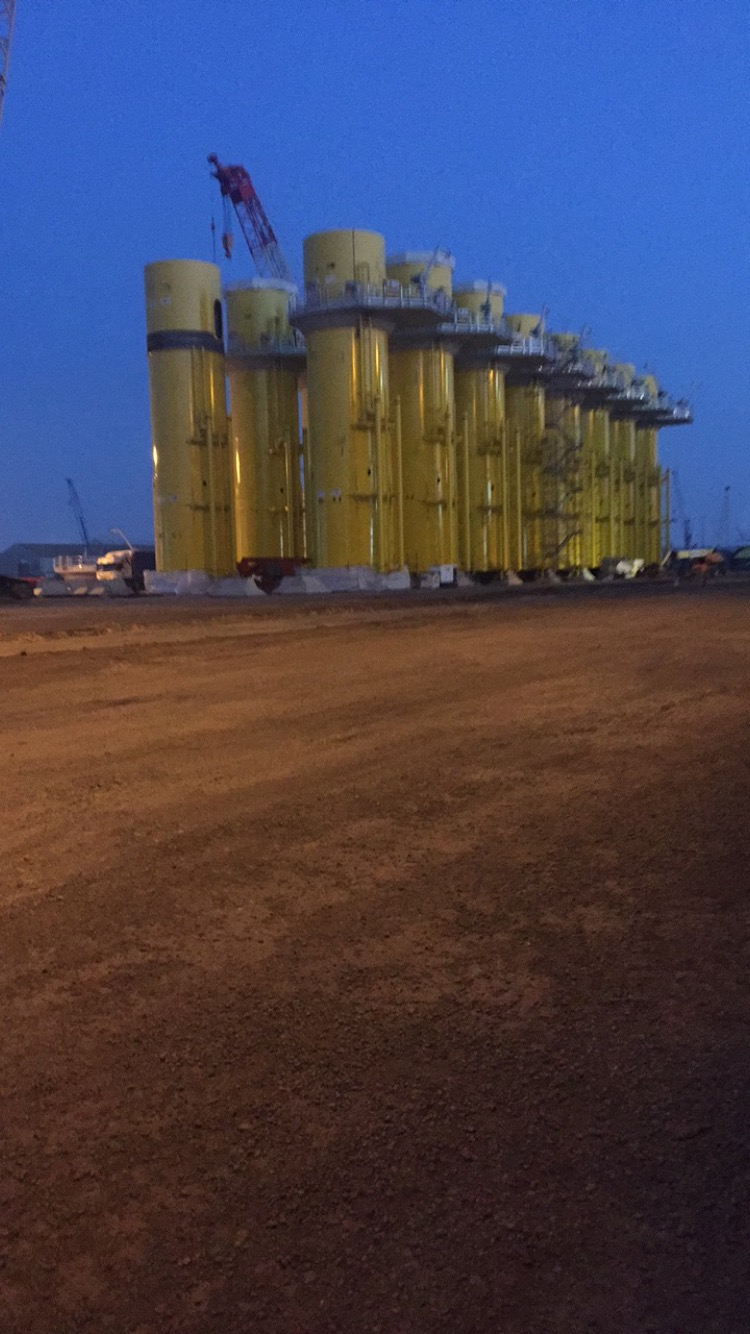
RSL specialising in precision measurements for large-scale engineering projects, was tasked with conducting detailed flatness measurements for the upper (WTG/Foundation) and lower (MP/TP) flanges of a wind turbine generator (WTG) foundation. The accuracy of these measurements is critical to ensure the structural integrity and proper alignment of the wind turbine components.
Objective:
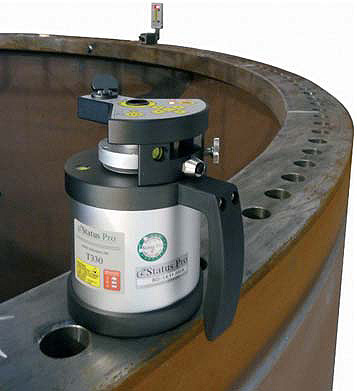
The primary goal was to achieve high-precision measurements for both the upper and lower flanges, despite the physical obstructions and different measurement requirements posed by each location. The upper flange required high-accuracy rotational laser measurements, while the lower flange, obstructed by LIP hanger supports, necessitated the use of a Total Station.
Methodology:
Measurement Procedure:
• Orientation: The Transition Piece (TP) was placed in an upright position, ensuring the longitudinal axis between flanges was vertical and the flanges were horizontal.
• Surveys Conducted: Three distinct surveys were performed: one for the upper flange, one for the lower flange, and one overall geometry survey. Each flange survey focused on geometry and taper, with all targets strategically placed on respective surfaces (upper for the upper flange, underside for the lower flange). The overall geometry survey connected the three components, aligning all measurements into a unified coordinate system.
• Upper Flange: The Pro Flange v3 software provided detailed tabular and diagrammatic representations of the flange’s flatness and taper, ensuring high precision in the alignment.
• Lower Flange: The SC4W software processed the Total Station measurements, yielding accurate 3D coordinates for the lower flange despite the obstruction challenges.
• Overall Integration: The combined surveys ensured that the individual coordinate systems for each flange were accurately connected, and external components were correctly measured and integrated.